
 What is a back link? If you have ever worked on your own blog or website, then you are probably familiar with the term. However, with all of the buzz around SEO (search engine optimization), back links have taken on a somewhat esoteric and confusing tone.
In this post, I want to explore what back link are, what they do, and how to build them.
What is a back link?
A back link is essentially an incoming link that points back to your website or blog. For example, if Mary’s blog publishes a post containing a link back to your blog, that is a back link. If you leave a comment on Joe’s blog and include your web address, then that is also a back link.
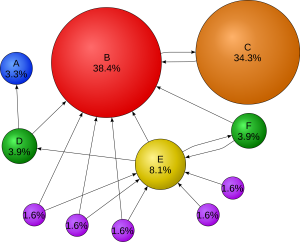 Back links are not all created equally; some have more importance for the search engines than others. Some search engines such as Google place importance on the page rank of the page linking to yours. For example, if Mary’s blog has a high page rank, and Joe’s blog has a low page rank, then a link from Mary’s blog to your blog will benefit you a lot more in respect to search engine rankings than will a link from Joe’s blog to your blog. Page rank is a form of status and reputation in the eyes of the search engines.
Some blogs and websites also put a rel=”nofollow” attribute into their link. When a link points back to your website with rel=”nofollow”, the webmaster is essentially telling the search engines “I don’t want to confer my status and reputation to this guy that I’m linking. I’d rather you don’t follow this link and bless it with my page rank. I am placing the link here for the benefit of my readers, only.”
Most blogs set their comment links to nofollow in order to reduce the incentive of spammers to spam their blogs with links. Although the links are nofollowed, a reader of the blog can still click on the link and visit the commentator’s website.
Why are back links important?
When someone adds a link back to your site, it is essentially a vote of confidence in your site. Not only does a back link to your site add the reputation and authority of their own site to yours, but that reputation is then passed forward in any outgoing links that you create. Back links can improve your ranking in the search engine results pages (SERPs), increasing your search engine traffic. Readers can discover your site through links on other sites, increasing your daily visitors. When someone links back to your site, they are vouching for your site, and placing the strength of their own page rank behind that.
What is the difference between an incoming link (a back link) and an outgoing link?
It is important to understand the difference between an incoming link and an outgoing link. When someone else links to your site, that is an incoming link, otherwise known as a back link. When you link to someone else, that is an outgoing link, and is NOT a back link as far as you are concerned.
When you decide to link to another site, you are in essence making a vote of confidence for that website, and telling the search engines that you would like to place the strength of your reputation and status into that vote. You should therefore be careful of which websites you link to, the same as you would be careful when referring a business associate to another associate, since your reputation is associated with the reference.
I recently received a guest post request via email which included two links to a mortgage loan website. The request included the following statement:
“Here is the article that I wrote for your website. Hopefully this article will transition into a great guest post and will help maximize your web site optimization. I included three back links but only 2 are linked back to <CORPORATE NAME REMOVED> and one is linked to the government loan options which I though would help diversify your authoritative links.”
The author has made several claims here:
- The article contains several back links.
- These backlinks will help me diversify my authoritative links.
- This article will help me maximize my web site optimization.
Points 2 and 3 can be interpreted in a certain way, but if we read them in the context of point 1, then they are disputable, since point 1 is itself disputable. If we look at our prior definition of incoming and outgoing links, then it should be clear that if I publish a guest post containing links to other websites, then these links are clearly not back links, as far as I am concerned. Instead of my website benefiting from a reputation boost, I am instead linking my own reputation with the linked websites! This is good for the linked website, but might not necessarily be good for me.
Could you imagine how it looks to a colleague if you refer a shady business associate to them? You are doing the same thing when you link to a less than reputable website on your website or blog.
I can only conclude that the article submitter was confused on the difference between an incoming link and an outgoing link, and that’s only if I proscribe to him the very best intentions!
More about back links
One question you might be asking is “what if a less than reputable website links to me? Does that hurt my website?” The answer here is, “It depends.” Some people use shady directory submission programs which submit their website to thousands of less-than-reputable websites simultaneously. In general, the search engines try to keep things so that your website cannot be hurt by the intentions of others, but having thousands of spammy links leading back to your website surely cannot be a good thing, either.
A second consideration is, “what if I want to include a link, but I don’t want to confer my reputation onto the link?” In that case, you might consider adding a rel=”nofollow” attribute to the link. Such a link would look like this:
<a href="http://unknown.com" rel="nofollow">Nofollowed link here</a>
Different search engines treat the link differently, so you might still be inadvertently helping out the website, but this attribute otherwise serves as a signal to the search engines to prevent page rank from being passed on to the outgoing link.
How do I go about building quality back links?
In my humble opinion, the best way to go about building high quality back links is to write stuff worth linking to, and to be selfless in your promotion of others. When you write articles out of the passions of your creativity, they will come across as honest and others will be interested in reading them. When you comment on other blogs and when you link to other blogs, you are giving them a vote of confidence and giving them a reason to come back and check out your website. I am part of the Yakezie challenge, which is a great example of what the power of community and selfless promotion can achieve.
Further Yakezie reading
- Early Retirement Extreme: Your source of everyday inspiration, gah!
- Financial Samurai: Samurai’s Alexa Ranking Challenge Update: Progress Through Adversity
- Planting Dollars: How I Went From no Blog to 122,661 on Alexa in 2 months.
So, reader, what do you think about the importance of back links, and of search engine optimization in general? I’m always looking forward to hearing your thoughts.


Awesome summary of back links. I really appreciated the nofollow part as I was a bit fuzzy on that stuff. Not fuzzy any more! I also was unaware of the comments providing back links, I guess that never crossed my mind. Really an excellent article, if only more explanations of blog topics were explained like this….
PS, can your next SEO topic have something to do with Feeds, mine is broken and I’m tired of trying to fix it lol:)
Sure, what’s up with your feeds? I had a bit of a pain trying to get those to work, myself!
oh man.. Honestly, I don’t really know what to say other than, it doesn’t work. I have spent hours trying to fix it, and am finally just content not having one for a while. It’s not worth the time and effort, I just end up frustrated and no further! If you would like to help, (and I’d be incredibly grateful!!:)) please send me an email, I don’t want to hijack your post!:)
Kevin, I’ve heard a few people mention to me recently that google doesn’t pay so much attention to nofollow lately (and this was supposedly mentioned by Matt Cutts as well). But as yet, I have found no substantive articles on the subject including a search of Matt Cutt’s blog. Have you read anything about it?
The most recent major change that I’ve read about is that Google no longer lets you nofollow links in order to increase the link juice going to your other links, otherwise known as “PageRank sculpting”.
Each page on your blog has a certain amount of page rank, and that page rank is divided up among all of your outgoing links. In the past, it used to be that if some of your outgoing links were nofollowed, then the linkjuice that should have gone to those links would be redistributed to your other links, instead.
SEO optimizers would take advantage of this and mark certain pages as “nofollow”, so that the outgoing page rank would be stronger for the other links. They also encouraged marking links as “nofollow” so that you would not “leak” page rank.
Now, they’ve changed the algorithm so that instead of redistributing the link juice, it is lost completely. This changes things so that there is no longer an advantage to marking links as nofollows, as the page rank that would have gone to that link is simply lost instead of being assigned to your other links.
This might have been the change you’ve heard about, but it could also be something else. I know that Yahoo doesn’t seem to care as much about the “nofollow” tag as Google does; indeed, each search engine treats this attribute differently!
That’s good to know….so basically you give away link juice with any outbound link regardless of nofollow. The question is whether you want that juice to fall into the void or be given to the other site. And if I understand this correctly, the only other reason to use nofollow then is if it’s to a paid advertiser so that google doesn’t penalize you further?
No wonder there are so many companies dedicated to understanding and optimizing SEO.
That’s right, Google doesn’t like it if you add irrelevant links to your site for the sole purpose of selling page rank. They use an example of a student site that contains paid links to online gambling as an example of what they don’t like.
If you only include reputable links that provide value to your users, then I don’t think you’ll run afoul of their policy. This is why the good paid directories and other such services pass their test, as they provide a valuable service to the users and it takes time to review the sites and ensure they only include quality sites.
I think you basically need to ask yourself, “Would I vouch for this link? Or am I just stuffing it here cause I want to make a few extra bucks, even though it’s a shitty link and adds nothing whatsoever for my readers?” So long as you would vouch for the link and it adds to your site, then you likely will not run afoul of their policy, as you are adding value to your readers and ensuring that their search results stay relevant, which is what they care about in the end.
Disclaimer: I am not a SEO wiz 🙂
Nice write up here….
I deal with backlinks in the way you seem too and especially of late have been very careful about which sites I link out to…..
I try to be careful, too; There seem to be two categories of link requests: Legit requests (from bloggers), and advertising-oriented requests (from company reps). The latter usually seem to be focused on topics revolving around debt in one form of another, and I’ve been getting better at spotting the blatant requests for free advertising from a mile away, as these are the guys that keep asking 😉
Awesome post. I need to use these more. I also need to move to WordPress at some point (hopefully next year) to get a more polished, professional website like yours. Keep up the good work Kevin, I’ll try and stop by often.
Thanks for the compliments; let me know if you need any help with the move, and definitely get working on it sooner rather than later! It is quite straightforward to get WordPress up and running on a new host these days, and you won’t regret it.
Nicely written. I’m no SEO expert, so this is a good read for me (especially that nofollow part). I do believe SEO is important. I’ve been trying to build backlinks mainly by commenting on other blogs. I’ve done a few guest posts too, with links back to my blog as well.
I’ve read that the most important SEO that you can do is to focus on the readers: write for them, post comments on other blogs, and write guest posts. So, so far, it sounds like you’re doing the right thing!
Those images were hilarious. I never quite understood the backlink protocol and have been pitched those spammy “let’s trade link” emails. Really glad I didn’t then and now know why I shouldn’t.
Agreed, Perhaps caveat *venditor* is a wise maxim to apply to the web!
I’ve never really focused on this stuff. Good to know, but it should drive the way we should run our sites and write.
I meant to write “it shouldN’T drive the way we run our sites and write”.
That said, how does one quantify all this? In my first year, I didn’t pay attention to anything, and things just started happening after the 6th month.
I think you’re right, Sam; The main focus should always be on delivering value through good content. Your own site is a great example of that. Some badass promotion and marketing through great communities such as the Yakezie really helps, too.
Yes SEO not problem…
嗨日運動,
在世界人民非常感謝每日的議案
卓越的服務於世界。這是一個義不容辭的職責,每日議案
審查和做要緊的,用我們的網站
http://www.goldenduas.com鏈接所有日常運動在世界排名
在公眾利益的統一與和平,避免飢荒,洪水,
地震,爆炸,極端主義活動,失業問題,整體
經濟危機,海嘯,法律與秩序問題,氣候變化,也
各種疾病的原因如下。
伊斯蘭 Govts和所有其他伊斯蘭組織在世界上失敗
注意到,基督徒是不
傲慢和其中的牧師和僧侶根據
在古蘭經經文 5:82.In缺席相同,就沒有和平與
2人口最多的world.Once古蘭經確認
基督教,那麼沒有基督教可以批評,伊斯蘭社會是假的
或撒旦社區。所有的穆斯林在世界是我們的信徒
先知,耶穌,摩西和穆罕默德(願他們)。我們沒有別的
除意向的消息傳播到所有社區在
世界在我們的網站上張貼 http://www.goldenduas.com
促進和諧,人類和平與安全的世界。該
問題轉化基督徒和所有其他社區在
世界伊斯蘭世界並不存在的原因,古蘭經
禁止強制轉換,每古蘭經詩句 2:256。基督徒
在世界上是服務志同道合的人,誰努力實現和平,研究等
公共服務在世界上,因此沒有人可以對法
基督教在世界上。請參考我們的網頁 http://www.goldenduas.com。
請協助和宣傳日常所有的網站排名反向運動
讓所有的社區在世界上訪問並下載我們
網站 http://www.goldenduas.com.in的利益
公開,和平,人道,就業,商業,安全,健康和
人類的財富在世界上並責成。
隨著親切的問候,
易卜拉欣阿里。
Gotta be the strangest spam I’ve ever seen… I’m letting it go by just to show as an example of what us bloggers see sometimes!
This whole SEO topic is so complex and ample that specifico posts such as this one serve a lot… this is a basic topic that every blogger should be failiar with, but it can be difficult to understand when not explained like this. I agree with the other comments that you should develop other important blogging topics in a clear language as this one.
I’ve been trying the backlink approach, but it requires a lot of time and effort (when done well at least). However, it’s been an awsome source of inspiration because it allows you to explore the web, other authors in related topics and high quality material out there…
Thanks for the feedback, Finanzas! The backlink thing took me a bit of time to understand in the beginning, but in the end it comes down to simple sharing and networking.
Kevin, I was looking for information on this topic and I was so pleased to see that Invest it Wisely did such a nice job covering it. Kudos to you!
I see you’ve been checking out my archives… thanks for leaving me feedback! It’s always a good feeling when an article receives a new comment.